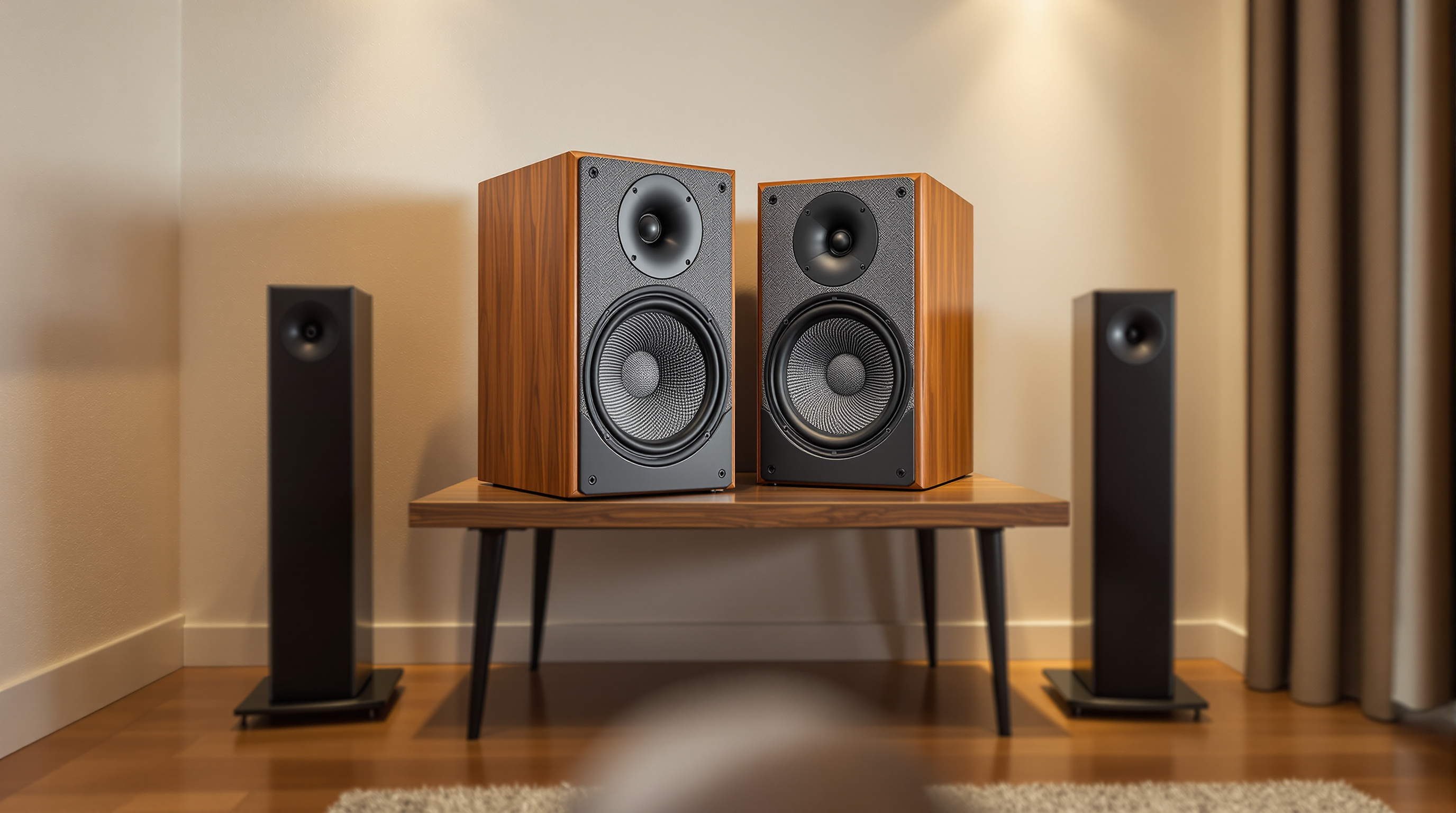
Home audio is one of the more specification-obscured consumer electronics categories. Speaker manufacturers report power handling numbers using inconsistent standards; amplifier wattage ratings are inflated; frequency response claims are made without disclosing the measurement conditions. The result is that comparing audio equipment by its published specifications without understanding what those numbers mean — or don't mean — leads buyers to poor decisions regularly.
This section covers home audio without the marketing gloss: how stereo systems work, what specifications actually matter, how to choose equipment for your budget and room, and where common buying mistakes happen.
Articles in This Section
-
How to Buy Speakers: What the Specs Really Mean
Sensitivity, impedance, frequency response, and driver types — the specifications that actually predict how a speaker will sound in your room, and the ones that don't.
-
How to Choose the Right Headphones
Open-back vs. closed-back, dynamic vs. planar magnetic, wired vs. wireless — matching headphone design to your use case and listening environment.
-
Buying a Stereo Receiver or Integrated Amplifier
The amplifier is the center of a traditional stereo system. This guide covers how to match amplifier power to speaker efficiency, what features matter, and when a simple integrated amplifier beats a more complex receiver.
How a Stereo System Works
Every audio system follows the same fundamental signal chain: source → preamplifier → power amplifier → speakers. Understanding where each component sits in this chain makes it easier to evaluate equipment and diagnose problems.
The source is wherever the audio signal originates: a streaming service, a CD player, a turntable, or a digital-to-analog converter (DAC) connected to a computer or phone. The source produces a line-level electrical signal — a low-voltage representation of the audio waveform.
The preamplifier receives the line-level signal, provides volume control, and may handle input switching between multiple sources. In component systems, this is a separate box. In integrated amplifiers and receivers, the preamplifier section is built in.
The power amplifier takes the line-level signal from the preamplifier and amplifies it to speaker-level — enough power to physically move speaker drivers. In component systems, this is a separate unit. In integrated amplifiers and receivers, it's built in alongside the preamp section.
The speakers convert the amplified electrical signal into physical sound waves by vibrating a driver (typically a cone suspended in a frame) that moves air.
Active speakers (often called "powered speakers") have the amplifier built into the speaker cabinet, eliminating the separate amplifier component. Passive speakers require an external amplifier. For desktop use and smaller systems, active speakers simplify setup; for larger systems and higher performance tiers, passive speakers with a matched amplifier typically provide better performance per dollar because each component can be optimized and upgraded independently.
Budget Tiers
Entry-level (under $300 for a complete system): At this tier, active speakers like the Edifier R1280DB or Klipsch ProMedia 2.1 provide solid performance for desktop or bedroom use without a separate amplifier. A used stereo receiver from a brand like Yamaha or Denon with a pair of bookshelf speakers from Polk or Klipsch is another strong option. Expect good clarity for casual listening; don't expect deep bass without a subwoofer.
Mid-range ($300–$1,000 for separates or quality actives): This range is where the quality per dollar is highest. A quality integrated amplifier from Yamaha, NAD, or Cambridge Audio paired with bookshelf speakers from Elac, Q Acoustics, or Wharfedale delivers genuinely good audio performance that most casual listeners will find difficult to improve upon meaningfully at higher costs. Active speakers like the KEF LSX II or Audioengine HD6 also sit in this tier.
Enthusiast ($1,000 and above): Diminishing returns set in sharply above this price point for most listeners in most rooms. Quality at this tier is real but incremental. Floor-standing speakers come into consideration; high-quality DACs, phono stages, and better amplifier circuitry make audible differences in a controlled listening environment with quality recordings. Room acoustics become the limiting factor at this level.
The Room Matters as Much as the Equipment
A well-treated room with budget speakers will sound better than an untreated room with expensive speakers. Parallel hard surfaces (bare walls, hardwood floors, glass windows) create reflections that cause comb filtering and standing waves — frequency-specific resonances that artificially boost some bass frequencies and cancel others depending on where you're sitting. This is why the same speaker system sounds dramatically different in different rooms.
Soft furnishings — upholstered furniture, rugs, curtains, bookshelves full of books — provide acoustic absorption and diffusion that reduce problematic reflections. A living room with a sectional sofa, area rug, and full bookshelves will almost always sound better than the same room with bare hardwood floors and minimal furniture. Budget acoustic treatment panels placed at first reflection points on side walls and the ceiling between the speakers and the listening position can make a significant improvement in clarity and imaging.
Speaker placement also matters. Bookshelf speakers generally need space behind them — at least a few inches from the rear wall — for bass to develop naturally. Speakers placed close to corners pick up boundary reinforcement that artificially and inaccurately boosts bass frequencies. The ideal placement for most bookshelf speakers is pulled away from walls, with the speaker baffles roughly in line with the listener's ear height.
Streaming Audio Quality
The quality of digital audio streaming has improved substantially over the past decade. Services including Tidal (MQA and Flac tiers), Apple Music (lossless and Dolby Atmos Spatial Audio), and Amazon Music HD offer lossless audio at CD quality (16-bit/44.1kHz) or high-resolution (24-bit/96kHz and above) to compatible devices at standard subscription prices.
Lossless audio preserves every bit of the original digital recording without compression-induced loss. Standard streaming audio (Spotify at 320kbps Ogg Vorbis; Apple Music AAC at 256kbps) uses perceptual compression — algorithms that discard audio information that the codec's designers determined was less audible — to reduce file sizes. The difference between lossless and high-quality compressed audio is subtle and audiologist-verified to be inaudible to most people in double-blind testing conditions, but the availability of lossless audio has largely rendered the comparison academic for those who prefer not to compromise.
For measured speaker and amplifier reviews, Audio Science Review provides objective measurements and analysis from a technically rigorous perspective. For the science of room acoustics, the Acoustical Society of America publishes accessible resources on acoustic principles.
For pairing your audio setup with a quality television, see our television buying guides.